THE CASTFaces that stay faces
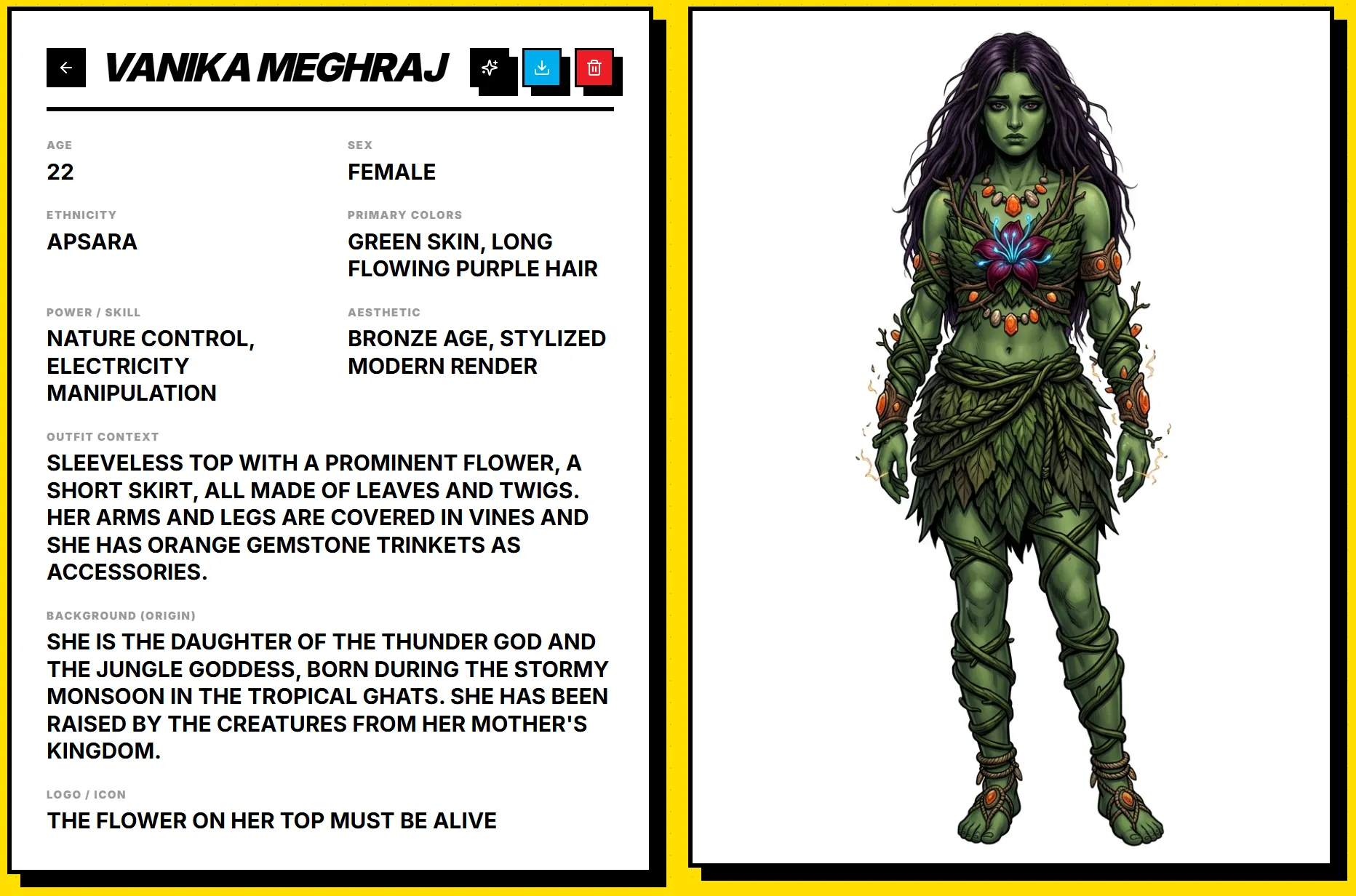
Describe a character in a simple form, or drop your own art straight in, and a portrait is painted. From it comes a full reference sheet: front, side, back, and the face up close. That sheet travels with every picture made afterward, so the face on page forty is still the face from page one.
Any portrait can try new poses, new outfits, new angles; versions of versions are kept. Choose one to lead. Nothing is thrown away, only shelved.
THE BOOKOne cover over everything
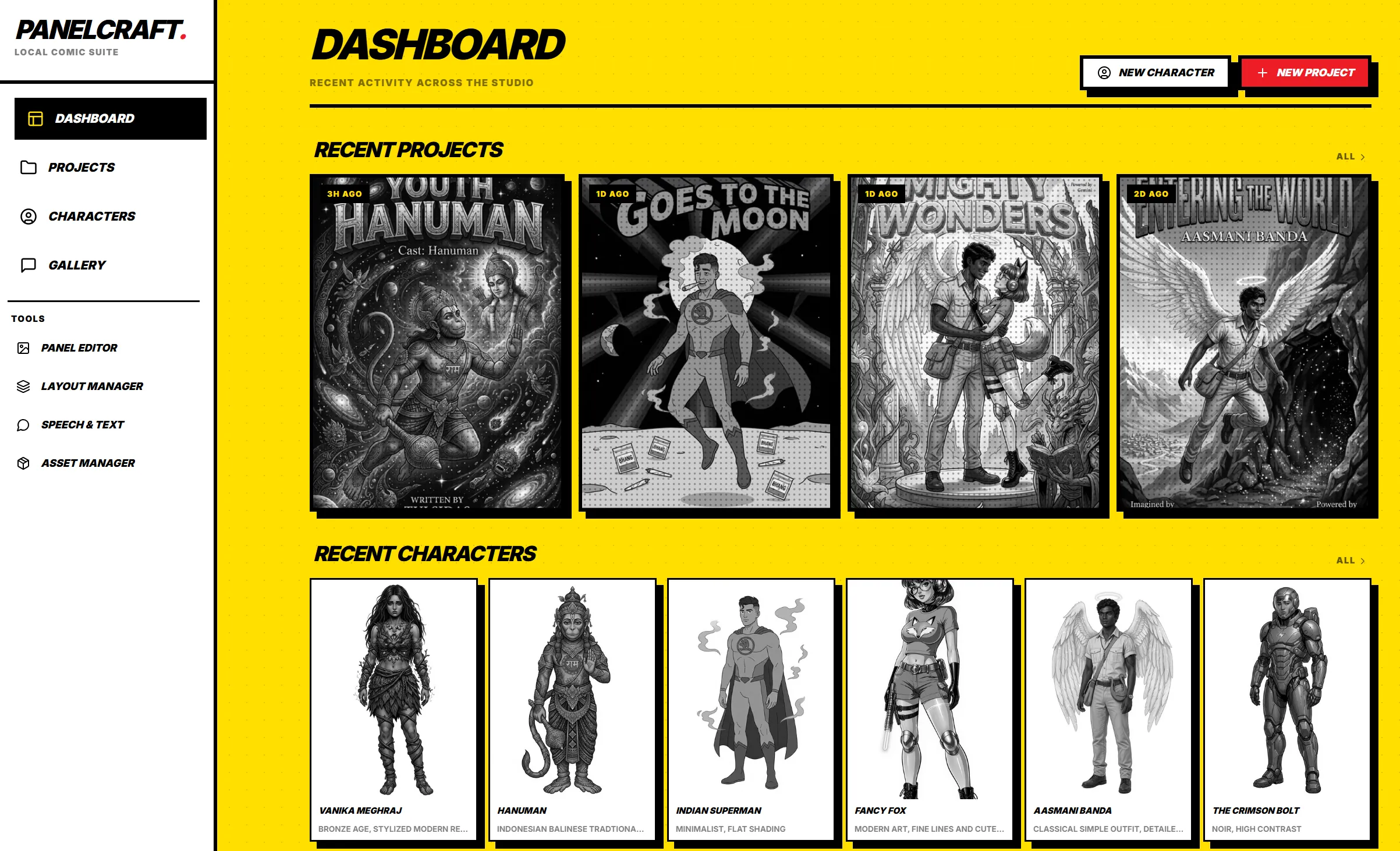
A project holds the cast, the panels, and the pages under one cover, painted with the whole cast in view. Covers are previewed first and kept only when you say so.
The finished book leaves as a print-ready file, with and without the speech, numbered from the cover. A whole project travels between machines as one folder, nothing lost.
THE BEATPanels that remember
Each panel is one moment, cast with exactly the characters it needs; their sheets ride along, so no one forgets their own face mid-scene. A character may wear their other costume in one panel without troubling the rest.
Any panel can seed the next: say what changes, what must stay, what appears, what goes. Scenes hold together; cuts stay fresh.
THE PAGEA printing desk in the browser
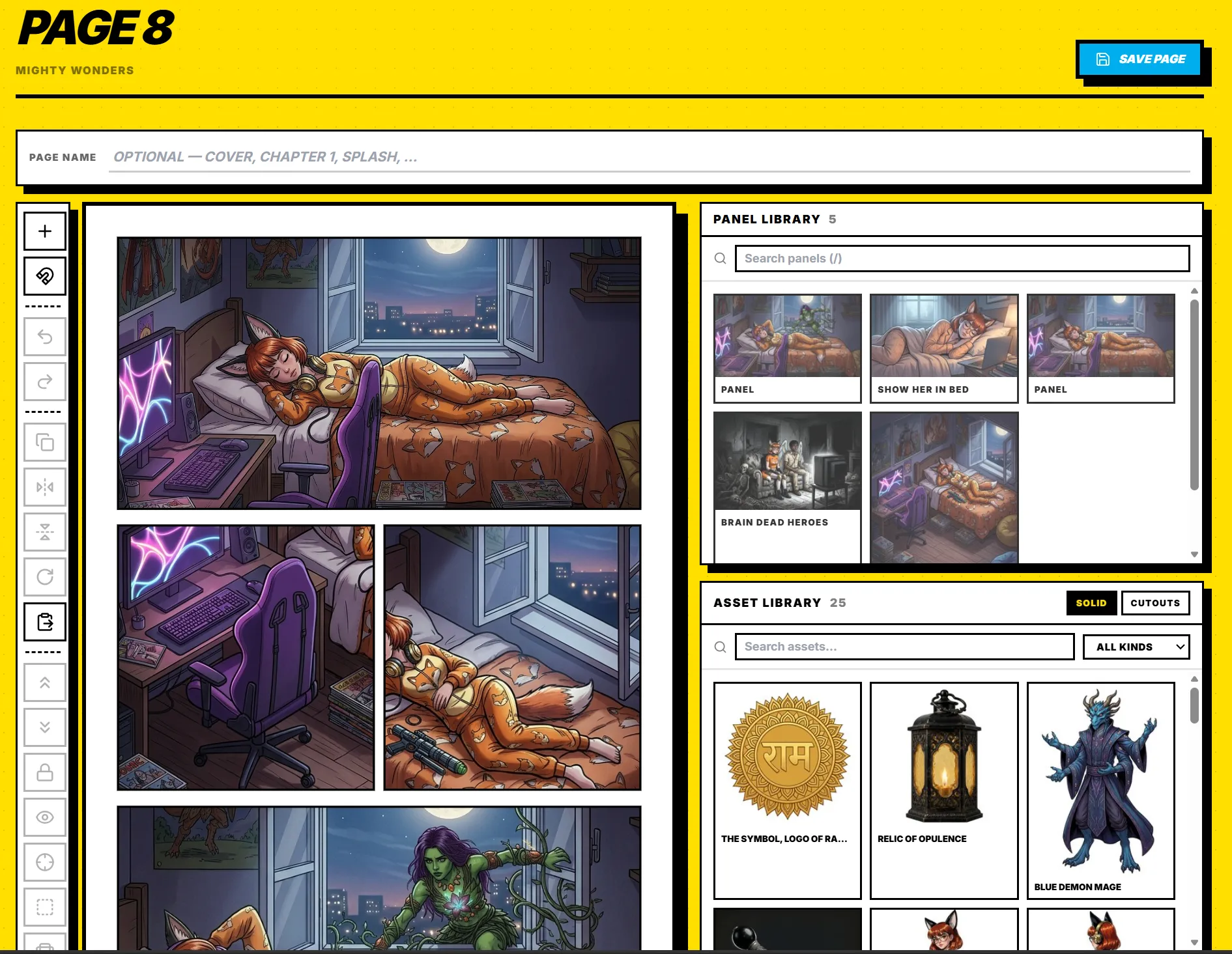
A full comic page, spreads included, with frames of any shape, layers, guides, snapping, and an undo that goes fifty steps back. Lay a ready-made grid or place every frame by hand; move and zoom each picture inside its frame.
Saving flattens the page into a print-ready sheet. What you see on screen is exactly what prints; a test holds it to that promise.
THE VOICEWords on the page
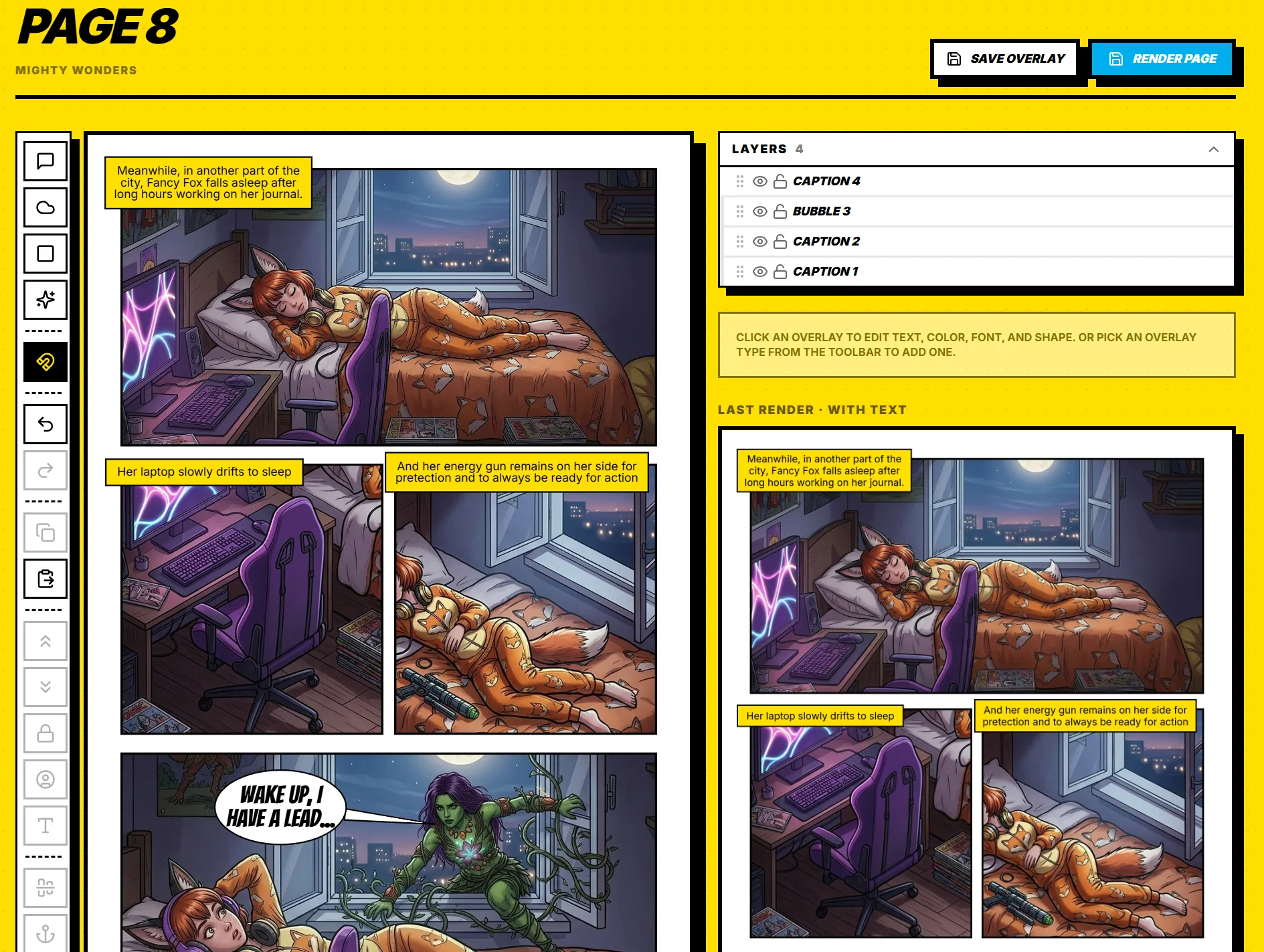
Speech, thought, caption, and sound, placed by hand: tails that drag where you pull them, text edited in place, each bubble with its own lettering, clouds that truly look like thought.
The words live as plain text forever. Re-lettering a page costs nothing and asks no machine.
THE VAULTA drawer for everything
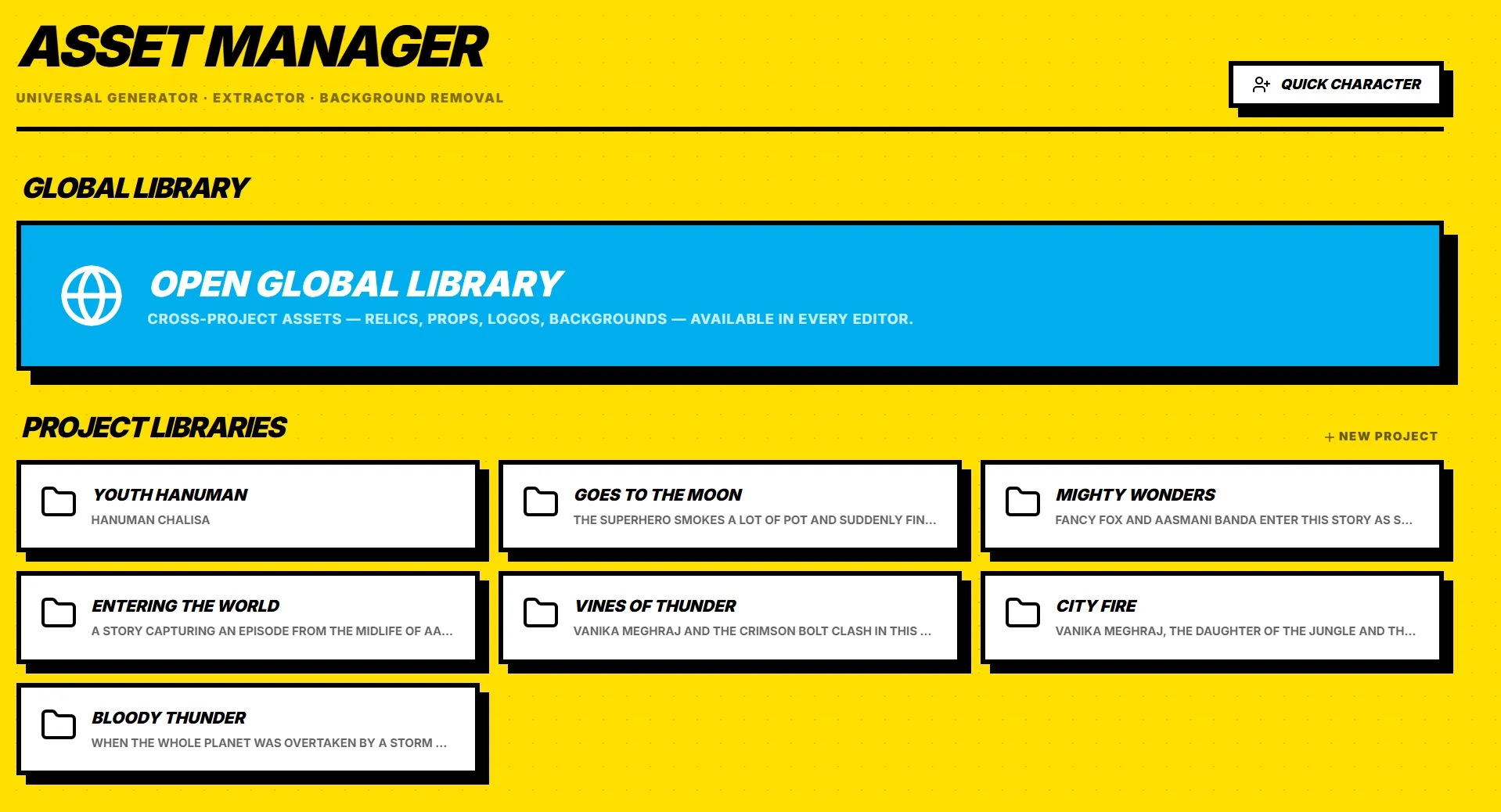
Props, relics, signs, and backdrops, made on their own or lifted out of any picture, the helmet, the carved sword, as new pieces. Backgrounds come off on your own machine. Everything lands in one drawer that feeds the pages and the panels.
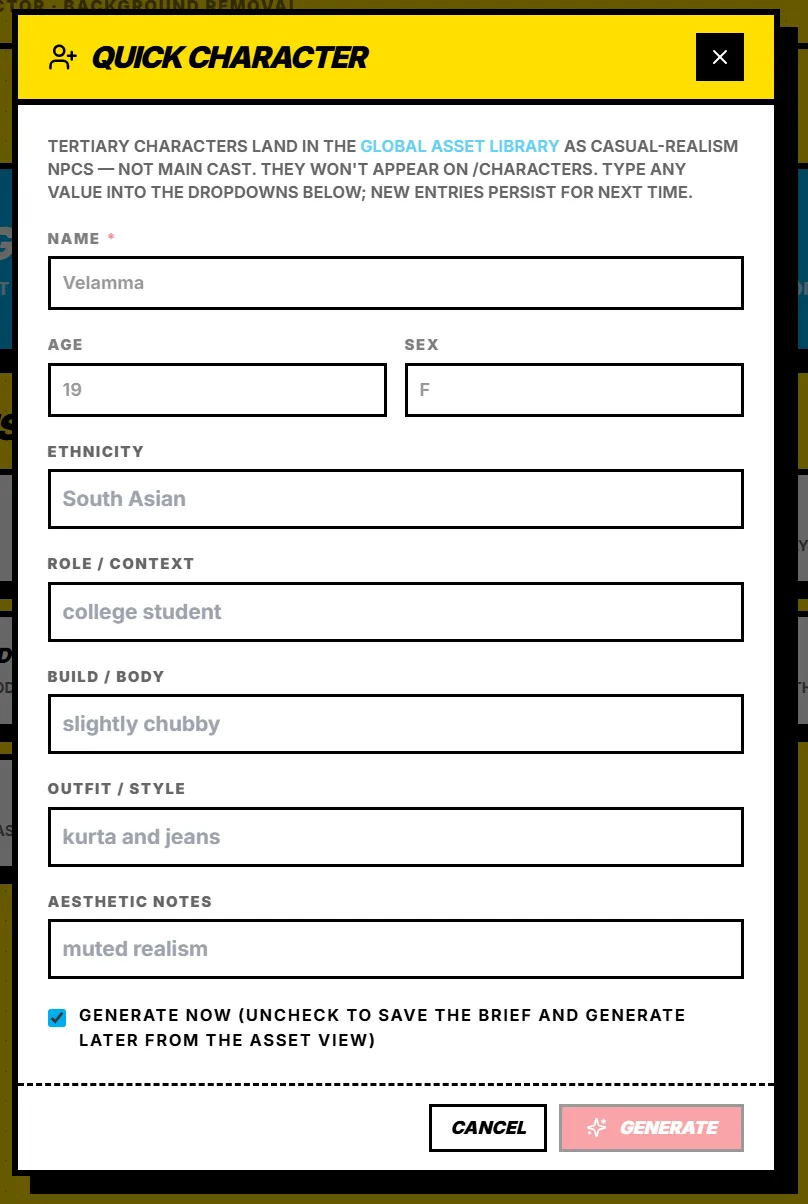
Passers-by are conjured from a small quick form without crowding the main cast, and any of them can be promoted to a full character the day they earn it.
THE ORCHESTRATORA brief goes in; a book comes out
Thirteen steps run in order: the story, the cast, the look, the cover, the pages, the panels, the words, the finished book. Each plan is checked by a second pair of machine eyes before a single picture is paid for.
Run it by hand, with help, or on its own; it reports as it works and stops itself the moment something needs your eyes. The demo below is this, distilled.
THE LEDGEREvery rupee written down
Every call to the machines writes down its cost and what it made, permanently, even if that thing is later deleted. The ledger rolls up into spend per character and per project, in dollars and rupees, by plain arithmetic; no machine ever touches the math.
The same ledger runs inside this page's demo. The books survive any deletion.
THE VOICES BEHINDThe writers behind the pictures
Every picture is asked for by a named voice with its own written instructions: one paints portraits, one draws the sheets, one the covers, one stages the panels. All of them are plain text you can read and rewrite, and your edits speak on the very next run.
The demo on this page runs these exact voices, word for word.